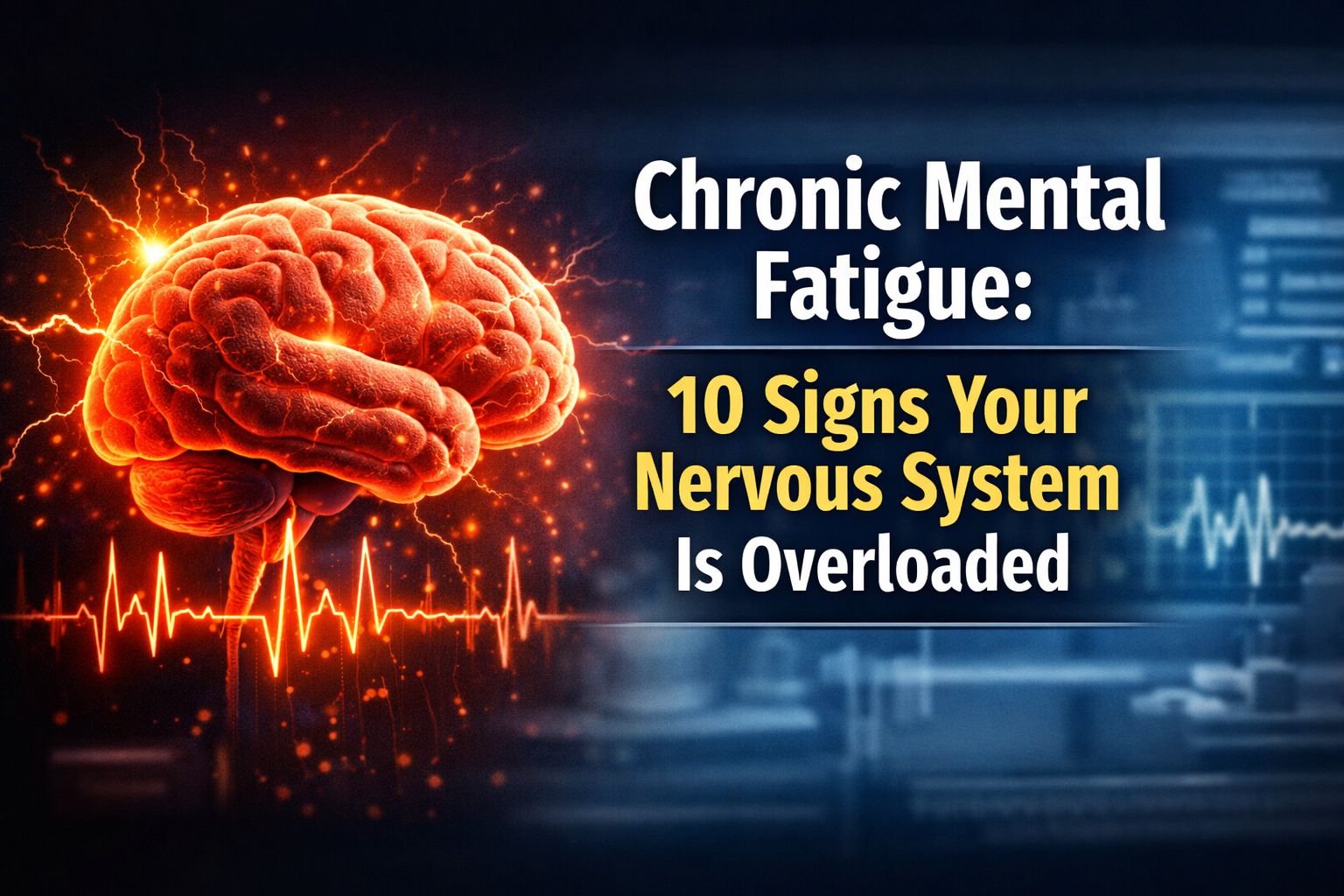
Fadiga Mental Crônica: 10 Sinais de que Seu Sistema Nervoso Está Sobrecarregado
A vida moderna não é apenas agitada — é neurologicamente avassaladora.
Muitas pessoas pensam que estão simplesmente cansadas.
Na realidade, elas estão sofrendo de desregulação crônica do sistema nervoso .
A fadiga mental crônica não é preguiça.
Não é fraqueza.
Muitas vezes é uma resposta biológica ao estresse.
Quando o sistema nervoso permanece em modo de sobrevivência por muito tempo, a exaustão se torna inevitável.
O que é fadiga mental crônica?
A fadiga mental crônica ocorre quando o estresse prolongado impede que o sistema nervoso retorne ao seu estado basal de regulação.
O sistema nervoso autônomo possui dois ramos principais:
Sistema Nervoso Simpático (luta ou fuga)
Sistema Nervoso Parassimpático (repouso e digestão)
De acordo com o Instituto Nacional de Saúde Mental , o estresse prolongado pode afetar significativamente o humor, a cognição, o sono e a saúde física.
Quando o estresse se torna crônico — pressão no trabalho, trauma, dificuldades financeiras, sobrecarga digital — o corpo tem dificuldade em desativar a resposta ao estresse.
Com o tempo, isso pode levar a níveis elevados de cortisol e à desregulação sistêmica.
A Associação Americana de Psicologia também observa que o estresse crônico está ligado a um risco aumentado de transtornos de ansiedade, depressão e esgotamento profissional.
10 Sinais de que Seu Sistema Nervoso Está Sobrecarregado
1. Você acorda cansado mesmo depois de dormir.
Dormir não me parece revigorante.
2. Confusão mental e dificuldade de concentração
Você tem dificuldade em processar informações de forma eficiente.
3. Irritabilidade por questões menores
Sua tolerância emocional diminui.
4. Ansiedade sem causa aparente
Você se sente tenso mesmo quando não há nada de errado de fato.
5. Pensamentos Acelerados à Noite
Seu corpo está exausto, mas sua mente está a mil.
6. Distúrbios digestivos
O intestino está intimamente ligado ao sistema de resposta ao estresse.
A Cleveland Clinic explica que o estresse crônico pode afetar a digestão e aumentar os sintomas gastrointestinais.
7. Entorpecimento Emocional
Redução da motivação, da alegria ou da capacidade de resposta emocional.
8. Sobrecarga Sensorial
O ruído e a luz são opressivos.
9. Tensão Muscular
Principalmente no pescoço, mandíbula e ombros.
10. Sensação constante de estar “à flor da pele”.
Uma sensação persistente de pressão interna.
Se vários sintomas lhe parecerem familiares, seu sistema nervoso pode estar desregulado.
Por que o estresse crônico afeta o corpo
Ativação prolongada da resposta ao estresse:
Aumenta o cortisol
Interrompe o ritmo circadiano
Prejudica a função imunológica
Altera a regulação do humor
Pesquisas destacadas pelos Centros de Controle e Prevenção de Doenças mostram que o estresse crônico contribui para problemas de saúde mental e física.
O corpo não foi projetado para permanecer em estado de luta ou fuga indefinidamente.
Como regular um sistema nervoso sobrecarregado
A regulamentação não tem a ver com produtividade. Tem a ver com sinais de segurança.
1. Reduzir a sobrecarga digital
Limitar a exposição às redes sociais e a realização de múltiplas tarefas simultaneamente.
2. Pratique a respiração lenta
Expirações mais longas estimulam o nervo vago e ativam a regulação parassimpática.
3. Pratique movimentos suaves
Caminhar, alongar-se ou praticar ioga ajudam a equilibrar o sistema nervoso.
4. Proteja a qualidade do sono
Mantenha horários regulares para dormir e acordar.
5. Criar segurança psicológica
A terapia ou o atendimento com foco no trauma podem ajudar a redefinir padrões de estresse crônico.
6. Estabeleça limites claros
O excesso de compromissos alimenta a ativação simpática.
Quando procurar ajuda profissional
Se a fadiga mental persistir por semanas ou interferir no trabalho, nos relacionamentos ou no funcionamento diário, consulte um profissional de saúde qualificado.
O apoio profissional é especialmente importante se os sintomas se agravarem e evoluírem para:
Ataques de pânico
Desespero persistente
Insônia grave
Ideação suicida
Se você estiver nos EUA, pode ligar para o 988 para obter apoio imediato em saúde mental.
Perguntas frequentes (FAQ)
Qual a diferença entre burnout e fadiga mental crônica?
A síndrome de burnout geralmente se manifesta como exaustão relacionada ao trabalho. A fadiga mental crônica pode resultar de estresse prolongado em qualquer área da vida.
O estresse crônico pode causar danos permanentes ao sistema nervoso?
O estresse crônico pode causar desregulação a longo prazo, mas o sistema nervoso é adaptável. Com intervenção, a recuperação é possível.
Quanto tempo leva para regular o sistema nervoso?
O tempo de recuperação varia. Algumas pessoas notam melhora em poucas semanas com práticas consistentes de regulação; outras podem precisar de apoio profissional.